
Community Montessori is something of a rarity in the education space—a school with absolutely no screen time or online component to our curriculum. There are no iPads, Chromebooks, or televisions. There is no Google Classroom, Zoom classes, or Kahoot.
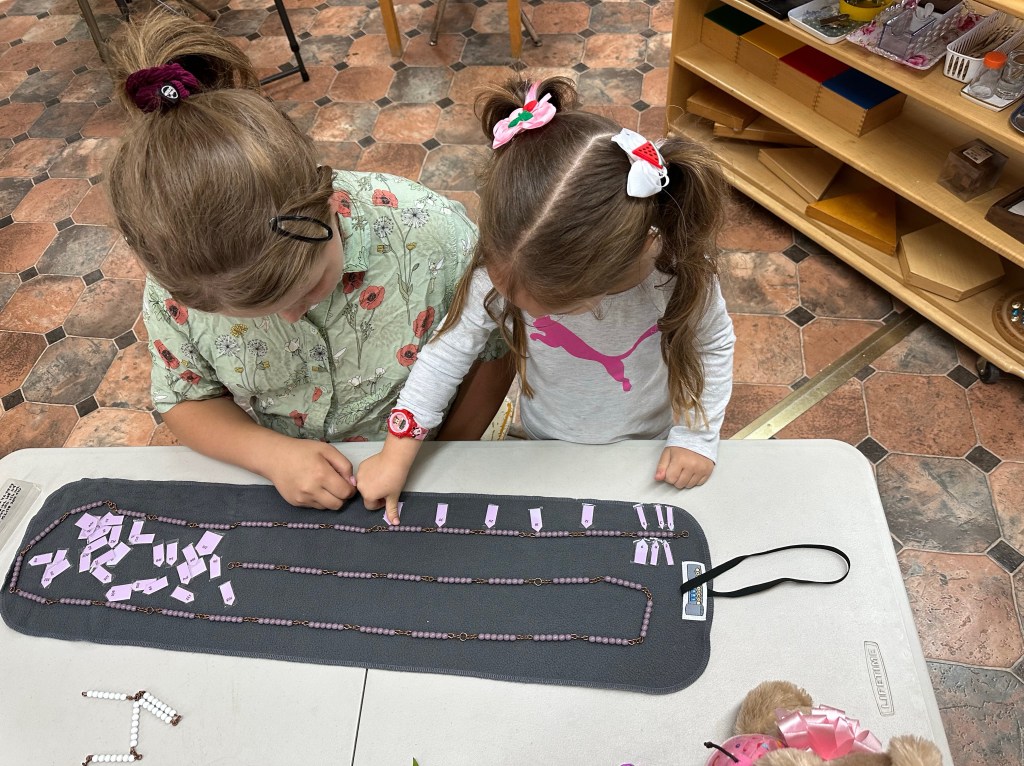
Why are we so adamant in our avoidance of educational technology? After all, many local public schools have adopted a 1:1 technology ratio (meaning that every student receives a laptop or tablet on the first day of school).
Many of the tasks given to students using these digital technologies are broken down into separate discrete skills, and are often hidden as games.
Unfortunately, students can learn how to play the reading game rather than how to read. The digital system may show an inflated score that does not reflect the student’s true abilities.
On the teacher’s end, data replaces observation as the basis for understanding a student’s current skill level, eliminating all nuance and acceptance of individual variation.
Children needn’t be tricked into learning, they are happy to do so on their own. As anyone who has ever misspoken in front of a child can tell you, they will learn whether you want them to or not!
Children’s natural inquisitiveness works perfectly within prepared Montessori environments. Meaningful, engaging work is available to students and they choose what, when, where, and how to complete it.
Students at Community Montessori are free to explore their interests, engage in handicrafts or science experiments, garden or observe nature. Much of this work is done in the physical world.
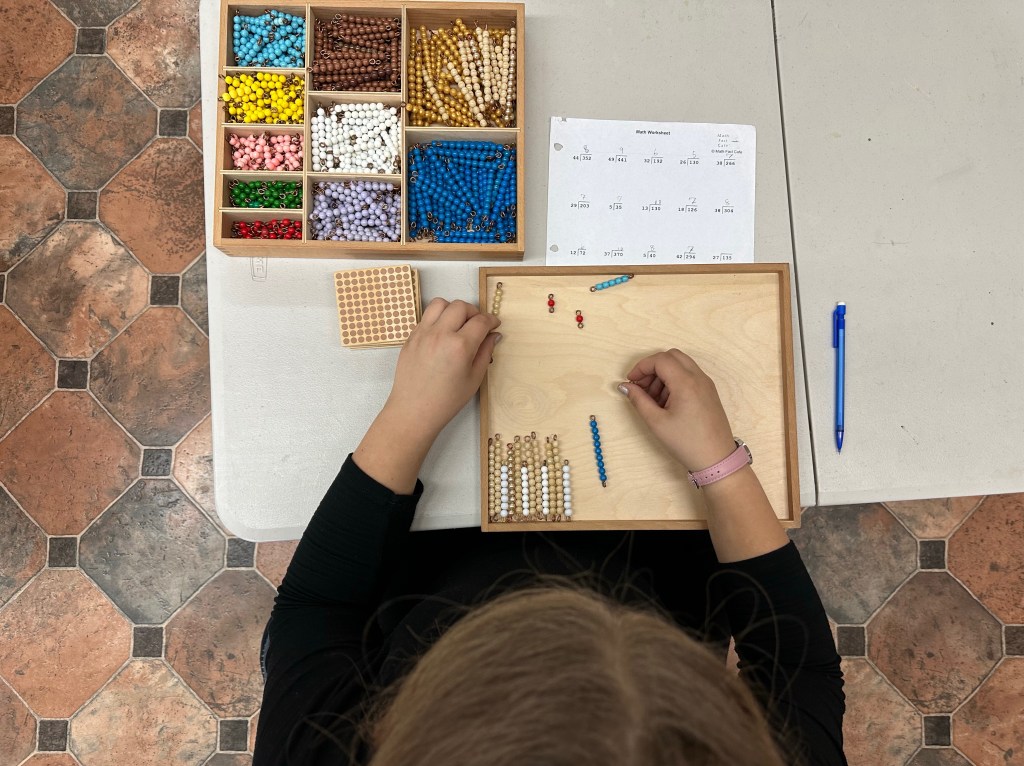
In school, many of us were made to memorize this equation: a2 + b2 = c2. The Pythagorean Theorum. But why does it work? How can we see it in the physical world? After all, triangles can be physical.
If your school experience was at all like mine, this question was greeted with confusion and it was simply reiterated that students should memorize the equation and engage with it in a wholly abstract and theoretical way. Learn just enough to prove “competence” and “understanding.”
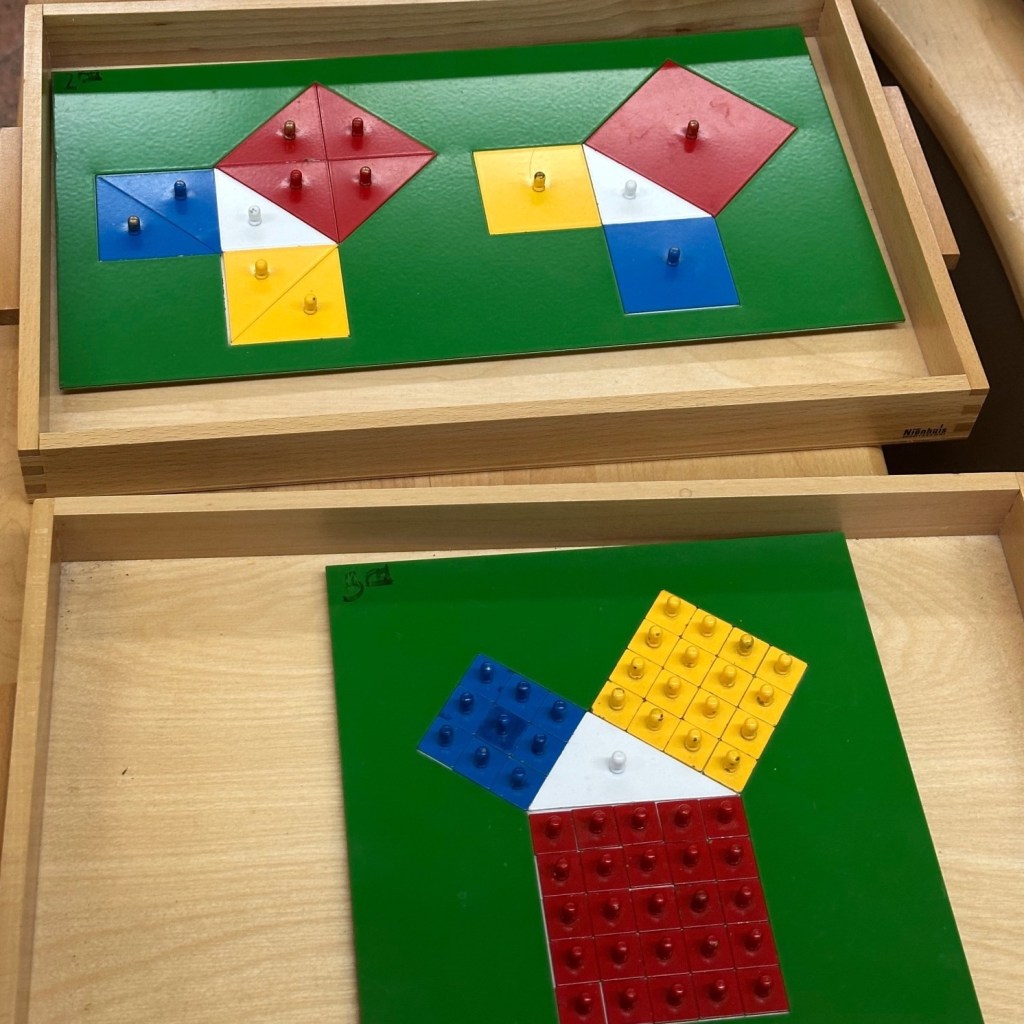
Montessori brings these concepts into the real world. Students have the opportunity to contemplate the abstract while engaging with the real, and building their innate understanding of mathematical concepts.
What is the problem with too much screen time?
The biggest problem with extensive screen time is not the content that children are consuming, nor is it potential learning confusion (conflating winning a game with mastering content, etc.).
The true problem is that while children are engaging with technology, they are not engaged in activities that will build the abilities and skills that they need to exist competently in the physical realm.
At some point we must all tie our own shoes, do our own laundry, cook our own meals. Many of us will learn to drive or perhaps we will have hobbies and interests that require excellent motor skills, such as art, fibercrafts, sports, dance, or fitness.
All of these skills require excellent fine and gross motor skills. Building that mind-body connection begins at birth. Neural pathways are the true “use it or lose it.” Underutilized neural pathways are trimmed during puberty, so we have a limited window to support our children in developing into capable adults.
When students are engaging digitally, they are not using their bodies to manipulate real things in the physical world. From birth to about age four, children are in the sensitive period for movement. Beginning with gross motor skills (crawling, walking, running, jumping, etc.) and progressing towards fine motor skills (using a pincer grip, manipulating small items, holding and using pencils, etc.).
If children do not get adequate experience with their own bodies during this time, targeted therapeutic exercises may be necessary for remediation, which are no longer interesting work to the older child.
A youth may be able to construct amazing worlds in Minecraft, but unable to put together a Lego set or write comfortably with a pencil.
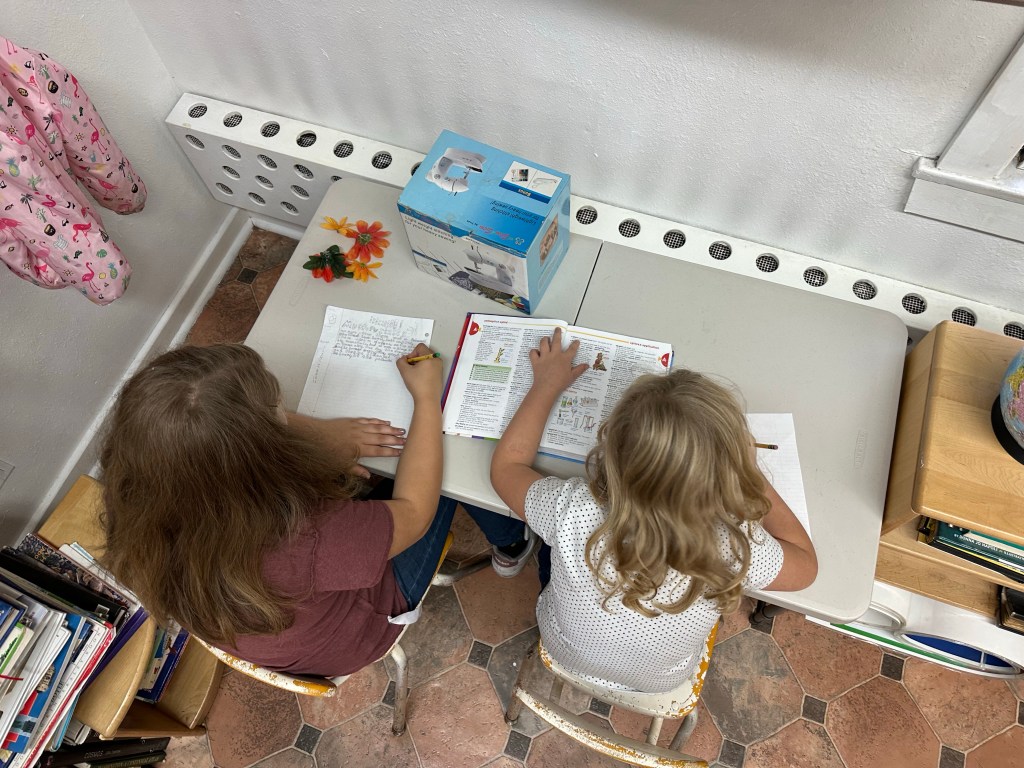
Eliminating screen time at school, and limiting it at home, supports student development, discourages shallow learning, and allows for true interaction amongst peers unmoderated by blue light.
 Community Montessori
Leave a comment